
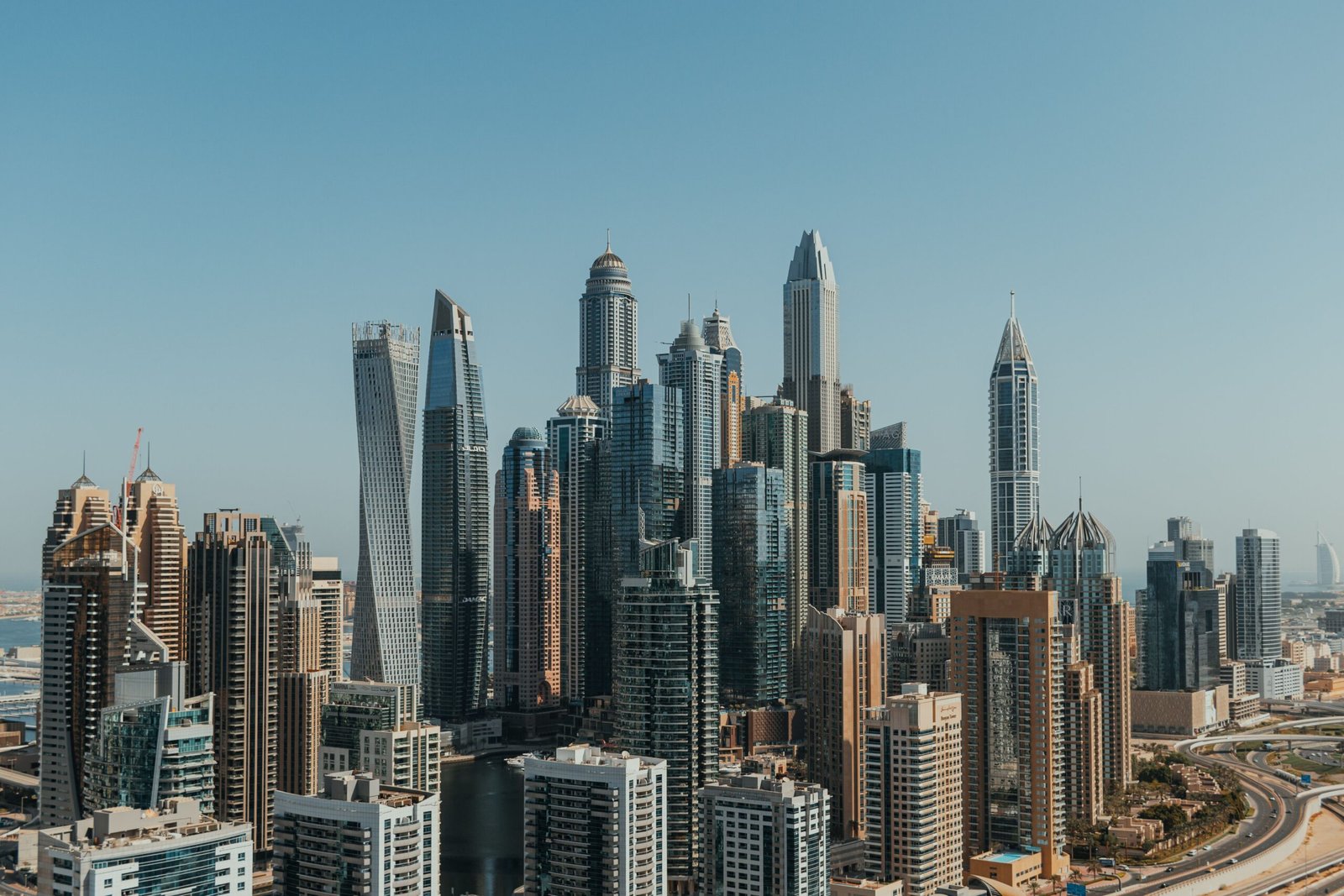
Here’s a number that’s hard to scroll past: Dubai’s real estate market moved roughly AED2.8 billion a day in the first three months of 2026, AED252 billion in total, a 31% jump in value and a 6% rise in volume from the same quarter last year.
If you’re weighing whether to invest in Dubai property, that’s the kind of headline that gets your attention. But here’s the thing: a booming market doesn’t automatically mean a good investment. It means the conditions (liquidity, a broad buyer base, policy support) are in place for a serious property market to exist. What you do with that opportunity is still on you.
So let’s break down what’s actually happening in Dubai’s market, why global demand keeps flowing in, and how to make sure the property you choose works as hard as the market around it.
For FAMA Group, which works day-to-day with property owners and corporate accommodation across Dubai, this is exactly where market-level growth meets the practical job of protecting an asset and keeping it productive.
Key takeaways
- Dubai recorded AED 252 billion in property transactions in Q1 2026, up 31% year on year.
- A total of 29,312 new investors entered the market, showing broader demand.
- Foreign investment reached AED 148.35 billion, up 26% year on year.
- Market growth does not replace proper property and financial due diligence.
- Your entry strategy matters, but management after purchase can determine performance.
What actually happened in Q1 2026?
The Dubai Land Department’s Q1 2026 report, released on 9 April 2026, is the clearest place to start. DLD recorded 60,303 real estate transactions during the quarter, part of 718,160 real estate procedures overall. Total real estate investment reached AED173 billion across 57,744 investments, a 22% rise in value and a 7% increase in number.
The investor base grew too. Dubai attracted 48,448 investors during the quarter, up 8% year on year. Of those, 29,312 were new investors, a 14% increase. Why does that matter? Because a market can’t really broaden if the same small group of buyers is just trading among itself. That kind of growth suggests Dubai is converting global visibility into actual, signed transactions, not just recycling the same buyers.
Foreign investment tells a similar story. DLD reported AED148.35 billion in foreign investment, up 26%, across 48,445 investments. GCC nationals contributed AED12.23 billion, Arab investors added AED12.11 billion, and women completed 15,540 investments worth AED32 billion. In other words: the buyer pool isn’t leaning on one nationality or one type of investor, which tends to make a market less fragile.
Luxury property stayed a major part of the picture too, with AED87.71 billion invested during Q1, up 26%. But don’t let the luxury headlines fool you into thinking that’s the whole story. Apartments, villas, off-plan units, ready properties and income-producing buildings are all serving very different budgets and goals at the same time.
One more thing worth knowing: not every report slices the data the same way. DLD’s AED252 billion figure covers total real estate transactions across the sector. A separate Q1 2026 residential market review from Engel & Völkers recorded AED143.1 billion in residential sales across 44,743 transactions, a 22.2% annual increase in value and 4.6% growth in volume. That report also flagged something useful: activity got more measured toward the end of the quarter, with buyers growing more selective. That’s not a red flag. If anything, it means investors may have had more room to compare, negotiate and walk away from weak deals, which makes careful property selection even more important right now.
Dubai property market
Q1 2026: Four numbers to know
Select a statistic to see what it means.A broad quarter of activity
DLD recorded 60,303 real estate transactions within 718,160 real estate procedures overall.
Meaning: The market grew in both transaction value and volume.
Why does global demand keep finding its way to Dubai?
Property demand doesn’t grow in a vacuum. People buy and rent homes near jobs, businesses, transport, schools and services, and investors tend to follow that same activity. Dubai has spent years building out its role as a business, tourism, logistics and financial hub, which means housing demand isn’t riding on a single industry.
The city’s population and workforce are also seriously international. New residents need somewhere to live. Companies need offices, logistics space, and accommodation for their teams. That creates demand at multiple price points at once: prime homes for wealthy buyers, mainstream apartments for professionals and families, and managed workforce housing for companies with large employee bases. That means you can match an investment to a real, identifiable end user instead of betting purely on resale speculation.
Dubai’s regulatory structure and digital property systems also make life easier for overseas buyers trying to make sense of a new market. Registration, transaction data and regulated brokers all help an investor verify ownership, document a purchase and keep an eye on the market from a distance.
Then there’s the policy angle. Dubai’s Economic Agenda D33, launched in January 2023, aims to double the size of the economy by 2033, with targets including AED650 billion in foreign direct investment and AED1 trillion in private-sector investment. That’s bigger than real estate on its own, but property tends to benefit whenever more companies, capital and skilled workers show up in a city. Housing and commercial demand follow real economic activity over time.
Dubai has also rolled out a dedicated Real Estate Sector Strategy 2033, launched by the Dubai Land Department in October 2024, targeting a 70% increase in real estate transactions, a market value of AED1 trillion, homeownership rising to 33%, and the sector’s GDP contribution roughly doubling to about AED73 billion. The plan leans on data, transparency, sustainable communities and international investment. If you’re thinking in five- or ten-year terms, that kind of institutional direction should carry more weight than any single strong quarter.
Is 2026 actually a good time to buy?
A rising market can make you feel like you’ve already missed the window. But the Q1 2026 picture is more nuanced than that: values and participation grew strongly year on year, while buyers got more selective toward the end of the quarter. That combination can actually work in a careful investor’s favor.
Start with liquidity. Property can’t be sold as quickly as a listed share, and some buildings take longer to exit than others, but a bigger, more diverse pool of active buyers improves your odds of finding a future purchaser when you’re ready to sell. Q1 alone added 29,312 new investors to that pool.
A more selective market also rewards discipline. When buyers stop rubber-stamping every launch and asking price, well-located, well-operated assets stand out from the noise. That’s your cue to focus on realistic rent, service charges, maintenance history, comparable sales and future supply, not just the sales pitch.
And Dubai gives you more than one way in. Some investors go for an off-plan unit with staged payments. Others want a ready home they can lease out immediately. More experienced buyers might look at an entire building, staff accommodation, or co-living spaces, an area where FAMA has seen rising demand from Dubai’s fast-growing, mobile workforce. Which route makes sense for you depends on your available capital, how much you need the income now, and how hands-on you want to be with operations (more on the risk trade-offs of each below).
A hot market still needs a smart property
The AED252 billion headline describes Dubai. It doesn’t describe the specific apartment or building you’re looking at. Two properties in the same city, sometimes even the same street, can produce very different results, and purchase price is only the first number in that calculation.
Start with demand
Who’s actually going to occupy this property, and why would they choose it over the alternatives? Look at nearby employment centers, transport links, schools, daily services and competing supply. A popular district can still have an oversupplied unit type. A less fashionable area can outperform if it serves a steady workforce or business cluster.
Then calculate the full cost of ownership
Registration and financing costs, service charges, insurance, repairs, vacancy, furnishing, agent fees and management fees all chip away at what you actually keep. Rental yield quoted against the purchase price is a gross figure, and gross isn’t what lands in your account. Bayut’s H1 2026 Dubai rental market report put average gross rental yields at 9.06% across the market for the first half of 2026, with affordable communities generating some of the strongest projected returns while newer or supply-constrained pockets swung further in either direction. That spread is exactly why net return (what’s left after recurring costs and realistic vacancy) is the number that should actually guide your decision, not the city-wide average.
Don't skip building condition
A lower purchase price can hide aging systems, deferred maintenance or poor common areas, and those issues come back to bite you through tenant turnover, repair bills and a weaker resale price. If you’re looking at entire buildings or workforce residential assets, review access control, occupancy records, safety procedures, maintenance schedules and compliance documents before you commit any capital.
This is exactly where FAMA’s services for property owners come in. The model is built around controlled occupancy, condition inspections, maintenance scheduling, compliance tracking and performance visibility. None of that sounds as exciting as a record transaction figure, but it’s what actually decides whether a property converts market demand into stable income.
The investment doesn't end at closing
A lot of property conversations stop the moment the transfer completes. For an income-producing asset, that’s really when the work starts. Rent needs collecting, maintenance requests need handling, inspections need completing, and occupancy needs to stay within agreed limits. Weak control can quietly erode a building’s condition even while the wider market keeps rising around it.
Take preventive maintenance. Servicing equipment before it fails usually gives you more control over timing and cost. Reactive repairs, on the other hand, interrupt tenants, create emergency expenses, and shorten the life of building systems. Documented inspections also give you a paper trail: useful evidence if you need to spot repeated damage or neglect early.
Occupancy works the same way. A fully occupied property isn’t automatically a healthy investment if tenants keep churning, use is uncontrolled, or subletting is poorly managed. Stable occupancy, clear agreements and accountable tenants are usually worth more than chasing the highest possible headcount. FAMA’s approach to property management is built around occupancy stabilization, inspection discipline, reporting and governance.
Corporate demand can also be a solid route for the right property. A company leasing accommodation for its workforce comes with an operational need, a defined employee population, and internal responsibility for the arrangement, a different risk profile than managing a rotating cast of unrelated individual tenants. It still needs careful contracts, compliance and day-to-day control, which is why FAMA works directly with corporates through a staff accommodation model that combines scalable allocation with centralized documentation, inspections and occupancy monitoring.
How do you actually start investing in Dubai property?
1. Define your objective and time horizon: Are you after monthly income, appreciation, capital preservation, personal use, or some mix of all four? Someone planning to sell in two years should evaluate a property differently than someone building a ten-year income portfolio.
2. Build a complete budget, not just a purchase price: Add transaction expenses, financing, furnishing, vacancy and repairs, and keep a cash buffer aside. Without one, a single unexpected bill can force you into borrowing or an unwanted sale.
3. Do the homework covered above: Comparable transactions, achievable rents, tenant demand, competing supply and, for off-plan, the developer’s track record and escrow arrangements. This is the step most buyers rush.
4. Run the legal and technical checks already outlined: Ownership, permitted use, liabilities, contract terms and building condition, ideally with independent legal and tax advice if you’re a company, partnership or cross-border buyer.
5. Decide who’s running the property before anyone moves in: Reporting schedule, maintenance approval limits, inspection frequency, leasing rules and performance measures, the operational side covered above. If you’re weighing a whole building or a corporate housing strategy, you can contact FAMA Group to talk it through.
What risks should you actually price in?
Strong annual growth has a way of convincing buyers that prices will just keep climbing. New supply, interest rates, financing conditions, geopolitical events and buyer sentiment can all slow transactions or affect values. Q1’s late-quarter moderation is a good reminder to stress-test any deal under less comfortable conditions before you commit.
Run a vacancy scenario: What happens if the property earns zero rent for three months? Test a higher maintenance bill. Test a lower resale price. If your numbers only work with annual rent increases and a fast sale, your margin for error is too thin.
Match the risk to how you’re buying: Off-plan buyers take on construction and delivery risk, which is exactly why Dubai’s escrow system exists. Under Law No. 8 of 2007, still the framework in force today and administered by Dubai’s Real Estate Regulatory Agency (RERA), developers selling off-plan units must deposit buyer payments into a project-specific escrow account, released only against construction progress verified by an independent engineer. Worth understanding before you sign anything. Ready-property buyers, meanwhile, inherit building-condition and tenant risk instead. Borrowers add interest-rate exposure on top. And if you’re investing from overseas, factor in currency movements, inheritance planning and tax obligations wherever you’re resident or liable.
Watch your concentration: Putting most of your savings into one property, one developer or one district creates more exposure than spreading across several asset types. Dubai’s growth can absolutely support a property allocation; it just shouldn’t be the whole strategy.
Frequently Asked Questions
What do you actually mean by “investment”?
It’s the use of money (or another resource) today with the goal of getting income, growth, or some other financial benefit down the line. Returns are never guaranteed, so every investment carries some risk. In property specifically, the benefit might come from rent, appreciation, or both, while costs, vacancy and market shifts can eat into the final return.
How do I actually start investing?
Define your goal, your time horizon, and the amount you can genuinely afford to put at risk, and keep an emergency fund completely separate from that. Compare suitable asset types, understand the fees and downside, then size your first move to what won’t strain your day-to-day finances. If property is the asset you’re leaning toward, the five-step approach earlier in this article covers the Dubai-specific homework.
Can I invest AED10,000 in the UAE?
Honestly, AED10,000 usually isn’t enough for a conventional direct property purchase in Dubai once you factor in the down payment and transaction costs. It can still be a starting point, though. Depending on your risk tolerance and eligibility, that could mean diversified funds, listed REITs, regulated fractional property platforms, fixed-income products, or simply a savings plan toward a future deposit. Whatever you choose, check that the platform and adviser are properly regulated, read the fee schedule closely, and don’t treat any projected return as guaranteed.
What are the seven types of investment?
There’s no single official list, but seven common categories are:
- Cash and term deposits
- Bonds and other fixed-income instruments
- Shares or equities
- Mutual funds and exchange-traded funds
- Real estate
- Commodities such as gold
- Private businesses, private equity or venture capital
Each one behaves differently: cash offers stability but limited growth, shares are liquid but volatile, and property can produce rent and appreciation but comes with high transaction costs and a slower exit. The right mix depends on you, not on which asset happens to be trending.
Can I deduct investment management fees?
It depends on your tax residence, legal structure, type of income and the purpose of the fee: an individual, a UAE company and an overseas company can all be treated differently. For UAE Corporate Tax, the Federal Tax Authority’s guidance on deductible expenditure confirms that legitimate business expenses incurred to derive taxable income are deductible in principle, subject to the applicable rules and allocation of personal or exempt elements. That doesn’t make every management fee automatically deductible, though. Keep your invoices and agreements, and get a qualified tax adviser to assess your specific arrangement.
The bottom line
Dubai’s Q1 2026 results paint a picture of a property market with real capital flow, growing participation, and a genuinely international buyer base. AED252 billion in transactions, AED173 billion in investment, and 29,312 new investors aren’t just headline numbers; they’re concrete signs of momentum. And the city’s economic and real estate strategies stretch that momentum well beyond a single strong quarter.
For you, the opportunity is in using that momentum carefully. A busy market supports demand and liquidity, but your actual return still comes down to the price you pay, the tenant you serve and the costs you carry: the fundamentals covered above, not the headline figure.
So the real question isn’t “Is Dubai booming?” That part’s already answered in the 2026 data. The better one is: “Which Dubai property can meet my goal, at a price and risk level I actually understand?” That comes down to disciplined selection and independent advice, worth working through before you sign, not after.